



Why Does My Tire Pressure Light Come On When It Gets Cold?
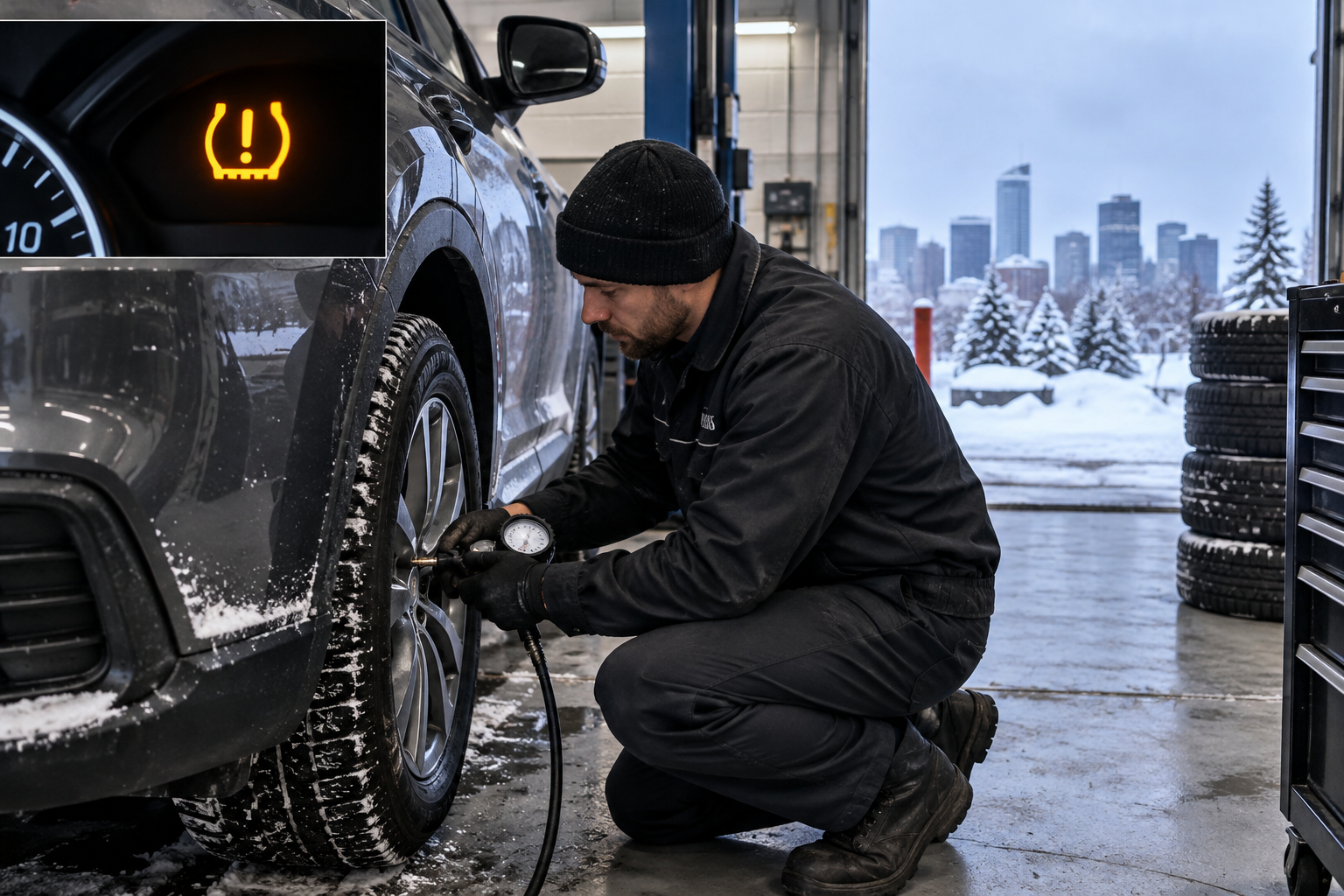
If your tire-pressure warning appears on the first cold Edmonton morning, the temperature drop may be part of the reason. Tire pressure changes with temperature. A tire that was correctly inflated during warmer weather can read lower after a major cold snap, and a tire that was already slightly low can cross the TPMS warning threshold.
Do not automatically clear the warning or assume there is no leak. Check all four tires when they are cold and set them to the pressure specified for the vehicle. Auto Imports provides tire and wheel service in Edmonton, including seasonal tire service and TPMS support.
Updated September 2026
Why Does Tire Pressure Drop in Cold Weather?
The air inside a tire contracts as temperature falls, so measured pressure decreases. A rapid Edmonton temperature drop can therefore trigger a tire-pressure warning on an otherwise healthy vehicle.
The key distinction is between a temperature-related change and an actual air leak. If all four tires drop similarly after a major weather change, temperature may explain much of it. If one tire repeatedly needs air, inspect it for a puncture, valve leak, bead leak or wheel damage.
What Tire Pressure Should You Use in an Edmonton Winter?
Use the vehicle manufacturer’s specified cold tire pressure, normally shown on the tire-information placard in the driver’s door opening. Some vehicles specify different front and rear pressures.
Do not inflate to the pressure molded into the tire sidewall. That marking is not the vehicle manufacturer’s recommended operating pressure. Check pressure when the tires are cold because driving heats the tires and changes the reading.
Does the TPMS Light Always Mean You Have a Flat Tire?
No. The tire pressure monitoring system warns about a pressure condition, but the warning itself does not identify the cause. Cold temperature, gradual air loss, a puncture or another leak can all result in low pressure.
Some warnings can also relate to a sensor or system fault. During a seasonal tire changeover, Auto Imports checks tire condition, sets pressures and handles applicable TPMS reset or relearn procedures.
Why Does Only One Tire Keep Going Low?
A temperature change should affect tires exposed to similar conditions. One tire that repeatedly loses more pressure than the others deserves inspection.
Possible causes include a tread puncture, leaking valve, bead-sealing problem, corrosion at the wheel sealing surface or wheel damage. Adding air repeatedly treats the symptom but does not repair the leak.
Uneven wear can point to alignment or suspension concerns. Our guide on when to replace your tires explains how tread condition and wear patterns affect replacement decisions.
Why Tire Pressure Matters More in Winter
Winter traction depends on the tire maintaining the operating conditions intended for the vehicle. Incorrect pressure can affect tire wear, steering response and handling. It also makes it harder to get the full benefit from a good winter tire.
If you are still choosing your winter set, read our guide on how to choose the right winter tires for Edmonton.
Cold-Weather Tire Pressure FAQ
Why does my tire pressure light come on when it gets cold?
Tire pressure falls as temperature drops. A tire already near the warning threshold can trigger the light during a cold snap.
What tire pressure should I use in winter?
Use the cold pressure specified by the vehicle manufacturer on the tire-information placard.
Should I use the PSI printed on the tire sidewall?
No. Use the vehicle manufacturer’s recommended pressure.
Why does only one tire keep losing pressure?
Inspect it for a puncture, valve or bead leak, wheel damage or another source of air loss.
Can a TPMS sensor fail in cold weather?
Yes, but check actual tire pressures and diagnose the system before assuming the sensor failed.
If your TPMS warning stays on or one tire repeatedly loses pressure, contact Auto Imports to arrange a tire inspection before Edmonton winter conditions intensify.